Large-scale afforestation in China: why tree growth speed does not guarantee ecosystem success
China is implementing the 'Great Green Wall' program, but scientists warn that artificial forests lack the long-term resilience of natural ones.
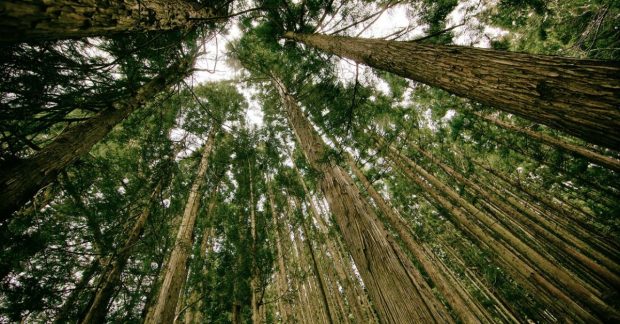 💼Economy
Photo: UNIAN
Key points
- China has planted 66 billion trees under the 'Great Green Wall' program.
- Artificial forests grow 66% faster but are less resilient than natural ones.
- The effectiveness of forest restoration depends on care and species selection, not just the number of trees.
Features of artificial forest restoration
China continues to implement its ambitious 'Great Green Wall' environmental program, which has seen approximately 66 billion trees planted since 1978. The government plans to plant an additional 34 billion saplings by 2050. The initiative's primary goal is to halt desert expansion and improve carbon sequestration.
A new study published in Geophysical Research Letters found that trees in artificial plantations grow 66% faster than their natural counterparts. This result is achieved through the selection of fast-growing species, such as poplars and eucalyptus, and consistent maintenance, including the removal of competing vegetation and the use of fertilizers.
Quality over quantity
Despite the impressive growth rates, researchers led by Yuhan Luo of Peking University emphasize that artificial plantations are not a full substitute for natural forests. In the long term, natural ecosystems demonstrate significantly higher resilience and a capacity for stable carbon storage.
«Artificial plantations are a powerful tool for carbon sequestration in the short term, but their advantage is time-limited», — notes Yuhan Luo.
The experience of other countries, such as Ethiopia, where mass tree-planting campaigns face low sapling survival rates, confirms the importance of quality planning. Experts urge shifting the focus from quantitative metrics to careful species selection and long-term monitoring of forest health.
Source UNIAN — unian.ua/science/lisi-kitayu-chim-66-mlrd-visadzhenih-derev-vidrizn… ↗
Read next
 🛡️Security
Rosstat data: over 92% of Russian army losses are combat-related
Leaked data from Russian state statistics indicate that the vast majority of deaths among Russian military personnel since 2022 are directly linked to combat operations.
 👥Society
Miraculous rescue: 7-year-old boy pulled from rubble of destroyed building in Dymer
Following a Russian drone attack on an apartment building in Dymer, rescuers pulled out a child who had spent over 13 hours under the debris.
 🏙️City
NATO strengthens eastern flank defense following incidents in Poland
The Alliance is considering deploying additional forces in Europe following the violation of Polish airspace by Russian missiles.
President warns of potential new strikes: what Boryspil residents should know
Volodymyr Zelenskyy reported intelligence data on Russia preparing for new strikes and urged citizens to stay vigilant.
 🏙️City
President holds meeting on energy infrastructure protection: implications for Boryspil
Volodymyr Zelenskyy discussed measures to strengthen energy infrastructure and restore power supplies with government officials and energy company leaders.
 🏙️City
Solar power plant planned near Hlyboke: Boryspil City Council rezones land
Boryspil City Council has reallocated 15 hectares of land near the village of Hlyboke for energy infrastructure development.