Secrets of Lush Blooming: How to Properly Fertilize Indoor Begonias at Home
Indoor begonias require regular feeding to form abundant buds. Experts explain how to choose mineral and organic mixtures depending on the growth stage.
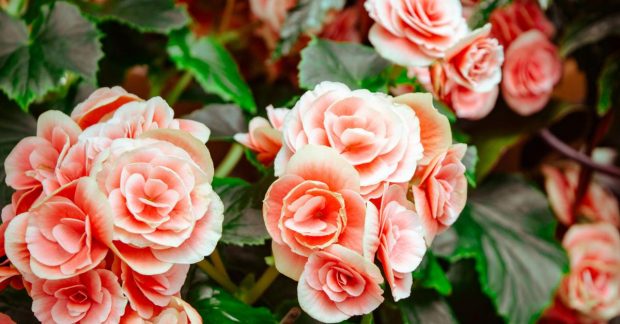 🏙️City
Photo: UNIAN
Key points
- Begonias need regular feeding due to the rapid leaching of nutrients from potting soil.
- Balanced complexes suit the foliage growth stage, while phosphorus and potassium are essential during blooming.
- Fertilizers must always be applied to damp soil to prevent root damage.
Taking care of indoor plants often raises questions for apartment owners, especially when it comes to decorative species with abundant blooms. Begonias remain a popular window sill decoration, reacting sensitively to nutrient deficiencies within the limited space of a pot. Due to the small volume of soil, useful elements wash out quickly during watering, causing the flowers to lack the energy needed to form new buds.
Choosing Fertilizers Based on Growth Stages
Experts emphasize that there is no universal feeding recipe, as the plant's needs change across vegetative phases. When a green pet is waking up from its winter dormancy and growing foliage, balanced complexes with equal amounts of nitrogen, phosphorus, and potassium are recommended. These ensure harmonious development of both the root system and the upper growth.
The situation changes once the first buds appear. At this stage, nitrogen components should be completely eliminated, as they stimulate green foliage growth at the expense of blossoms. Phosphorus and potassium become the top priority: the former provides energy for flower setting, while the latter enhances overall plant endurance. Popular options include superphosphate and potassium monophosphate.
Safe Application Rules and Feeding Frequency
A crucial rule is applying any substance exclusively to pre-moistened soil. The pot should first be watered with plain water to prevent chemical root burns. Liquid fertilizers are absorbed by indoor plants much faster than dry or granular alternatives.
During the active phase, mixtures are added every 10 to 14 days. For exceptionally lush buds, weekly feeding is practiced, provided the concentration is diluted four times more than the manufacturer's recommendation. Organic alternatives include bone meal, seaweed extract, ash, and compost. Once flowering ends, the begonia enters dormancy, and fertilizing is paused until the next blooming cycle.
Source UNIAN — unian.ua/lite/advice/chem-podkormit-begoniyu-dlya-cveteniya-polezno… ↗
Read next
 🚌Transport
Tax burdens during shutdowns: Policy options discussed for ArcelorMittal
The forced suspension of operations at ArcelorMittal Kryvyi Rih highlights the critical need for state support and tax adjustments for industrial giants facing security t…
 🚨Events
Weather in December 2026: Forecasters Predict a Warmer Start to Winter in Ukraine
According to preliminary climatological estimates, the first month of winter 2026 in Ukraine will be milder than the climate norm, although occasional frosts and precipit…
 🚨Events
Smallest Owl in Ukraine Spotted in Chernobyl Reserve: Unique Features of the Pygmy Owl
Researchers have documented the rare Pygmy Owl, a tiny predator weighing less than 80 grams that remains active during daylight hours.
 🧠AI Analysis
Boryspil joins Transparency International Ukraine’s «Transparent Cities» program
The city of Boryspil has been included in the list of participants for the analytical initiative «Transparent Cities» by Transparency International Ukraine to enhance mun…
Consequences of the night attack on the Vinnytsia region: civilian facilities damaged
A night enemy strike on the Vinnytsia region resulted in damage to a civilian industrial facility and private residential buildings.
NHL Regular Season: Carolina Ends Rangers' Winning Streak
In the latest round of the National Hockey League, Carolina confidently defeated the New York Rangers, halting their four-game winning streak.